Home › Services
Vinyl fence in Cincinnati: privacy, picket and semi-privacy styles
A vinyl fence cincinnati homeowners will still like in fifteen years comes down to details most sales sheets skip: how thick the PVC walls are, what is hidden inside the rails and gate posts, how the posts sit in heavy Ohio clay, and how the panels were fitted to handle a summer afternoon in the nineties followed by a January night in the single digits. Vinyl is low maintenance, not no maintenance, and it is less forgiving of sloppy installation than wood. This page explains the styles, the materials, the local weather and soil problems, and what a written proposal should state before anyone digs a hole in your yard.
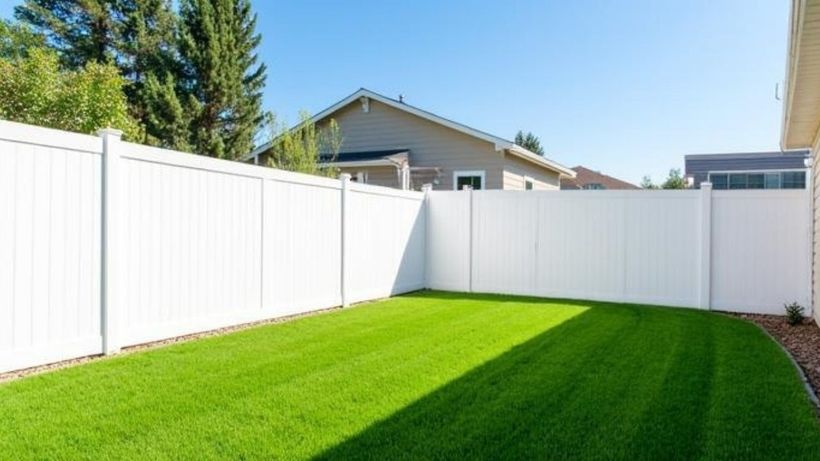
Privacy, semi-privacy and picket: choosing a vinyl style
Vinyl fencing comes in three broad families, and each behaves a little differently in the yard. A full privacy fence uses tongue-and-groove boards that lock together edge to edge, leaving no gaps. It blocks sight lines completely, which is why it is common on tight lots in Westwood, Delhi and Green Township where the neighbor's patio sits a few steps from yours. The tradeoff is wind load. A solid six-foot panel acts like a sail, and every gust pushes on the posts.
Semi-privacy styles leave small gaps between boards, use alternating board widths, or top a solid lower section with a lattice or spindle band. They soften the view without sealing it off, let some air move through, and take a little of the strain off the posts. Picket fences are the short, open option, usually three to four feet, used to frame a front yard, edge a garden or keep a small dog near the porch. Pickets can have pointed, flat, dog-ear or scalloped tops, and the spacing between them varies by product line.
- Full privacy: solid tongue-and-groove infill, the most screening and the most wind load.
- Semi-privacy: small gaps, shadowbox layouts or a lattice top, a middle ground on both screening and wind.
- Picket: open spacing and lower heights, mostly for front yards and decorative boundaries.
- Accent tops: lattice, spindles or a scalloped rail can be added to several styles for a less boxy look.
Wall thickness and what separates a sturdy panel from a flimsy one
Two vinyl fences can look identical from the street and perform very differently. The biggest hidden variable is the wall thickness of the extruded profiles: the posts, rails and boards. Thin-walled posts flex when you push on them, dent when a lawn mower bumps them, and can crack at the rail holes after a few seasons of movement. Heavier walls feel rigid, hold screws and brackets better, and keep their shape through temperature swings.
Board profiles matter too. Wider privacy boards with ribs or internal chambers resist bowing better than flat, hollow strips. Rails come in different depths, and a deeper rail spans between posts with less sag. Ask the contractor which product line they plan to use, what the post size is (five-inch posts are a common residential choice for privacy work, with four-inch posts on lighter styles), and whether sample pieces can be seen or handled before you sign. Squeezing a post and a rail in your hands tells you more than a glossy brochure photo.
Quality resin formulas also include ultraviolet inhibitors that slow fading and surface chalking. Cheaper compounds tend to yellow, chalk or turn brittle sooner. The product name and line should be written on the proposal so you know exactly what is going in.
Hidden reinforcement: aluminum in bottom rails and steel in gate posts
PVC is stiff enough for boards and top rails in ordinary spans, but it creeps under constant load. Over time a long, unsupported bottom rail carrying the weight of privacy boards can sag in the middle, opening a gap along the ground and letting boards drop out of the top channel. That is why better systems slide an aluminum stiffener inside the bottom rail. You never see it, but it keeps the rail straight for the life of the fence.
Gates are the other weak point. A gate hangs its full weight off one post and gets swung, slammed and leaned on. A hollow vinyl hinge post will lean toward the gate over time, and the latch will stop lining up. The fix is a metal insert. Many installers set a galvanized steel post or heavy aluminum insert inside the vinyl hinge post, often filled with concrete, and the gate frame itself should have an aluminum or steel internal frame so it does not rack into a parallelogram. Wide openings, such as a double drive gate or a walkway gate for a riding mower, need that reinforcement even more.
- Ask whether bottom rails get aluminum stiffeners on every privacy section, not only the long ones.
- Ask what goes inside the hinge post and latch post of each gate.
- Ask whether the gate has a metal internal frame and adjustable hinges.
- Ask for self-closing hinges if the gate opens to a pool area or a yard where a dog must stay in.
Cold snaps, winter impacts and why vinyl can crack in January
Vinyl loses much of its impact resistance as it gets cold. On a mild day a stray baseball or a bump from a snowblower bounces off. On a January morning in the teens, the same hit can crack a board or punch a hole in a rail. Cincinnati winters are not the harshest in the country, but the region regularly sees stretches of hard cold, and a fence along a driveway or street takes a beating from snow shovels, plows and chunks of ice thrown by salt trucks.
A few habits help. Keep snowblower chutes aimed away from the fence line. Avoid piling heavy, wet snow against the panels, especially low picket styles that can bury quickly. Do not chip ice off the boards with a shovel edge. And if you know a stretch of fence sits where a plow swings wide at the end of the driveway, talk with the contractor about pulling that run back a little or choosing a sturdier profile for that section. Most winter damage is a single cracked board or rail, which leads to the next point: vinyl is usually repairable piece by piece.
Expansion, contraction and the rail pockets that allow for it
PVC grows and shrinks noticeably with temperature. A long rail can change length by a meaningful fraction of an inch between a hot July afternoon and a cold January night. The fence has to absorb that movement somewhere, and a good system does it inside the posts. Rails slide into routed holes or pockets in the posts, and the installer leaves a small gap at each end so the rail can move without pushing the posts apart or buckling.
When an installer cuts rails too tight to make a snug-looking job, the fence may look perfect on install day and then bow, pop rails out of their pockets or crack post faces during the first summer heat wave. Cutting them too loose, on the other hand, lets rails slip out in the cold. The fix is simple craftsmanship: follow the manufacturer's spacing guidance, measure each bay rather than assuming every section is the same, and lock rails in place with the correct clips or screws where the system calls for them. Darker colors, which heat up more in the sun, make this allowance even more important.
Setting vinyl fence posts in Cincinnati clay and on sloped lots
Much of the Cincinnati area sits on heavy clay soils, often mixed with limestone rubble and shale on the hillsides. Clay holds water, swells when wet, shrinks when dry, and in winter it can heave when the water in it freezes. A fence post that is set too shallow, or set in a neat cone of concrete that the clay can grip and lift, will slowly rise or lean. Once a few posts are out of line, rails start binding in their pockets and gates stop latching.
Good practice is to dig below the local frost depth, bell the bottom of the hole slightly wider than the top so the footing resists uplift, add some gravel at the base for drainage, and crown the top of the concrete so water runs away from the post instead of pooling around it. Many installers set a galvanized steel pipe in concrete and slide the vinyl post over it on privacy runs, which adds real stiffness against wind. Ask how deep the holes will be and what is going inside the posts.
Slopes are the other local reality. Hilly lots in Anderson Township, Delhi, Colerain and along the river bluffs rarely allow a fence to run perfectly level. Vinyl privacy panels are usually stepped down the hill in level sections, leaving triangular gaps at the bottom that may need to be filled with soil or a skirt board. Some picket and semi-privacy styles can be racked a little to follow grade. The contractor should explain which approach fits your yard and how the gaps under a stepped fence will be handled if you have a dog.
Color choices: white, tan, gray and darker tones in summer heat
White is still the most common vinyl color because it is bright, reads as clean and stays cool in the sun. Tan, almond and clay tones blend into brick and stone houses and show dirt less than bright white. Gray and textured woodgrain finishes have become popular for a more modern look. Darker colors, such as deep browns and charcoal, absorb far more heat, and that has real consequences for vinyl.
A dark fence in full afternoon sun gets much hotter than a white one, which means more expansion, more stress at the rail pockets and, with some resins, a risk of warping or softening in the worst of a summer heat wave. Reputable manufacturers handle darker colors with special heat-resistant formulas or a colored cap layer over a lighter core. If you want a dark fence, ask the contractor which product they use, whether it is rated for dark colors, and whether the layout accounts for extra movement. Also ask about fading: most colored vinyl will lighten a little over the years in full sun, and a panel replaced later may not match exactly.
Cleaning, mildew on shaded sides and everyday upkeep
Vinyl will never need paint or stain, which is the main reason people choose it. It does get dirty. In a humid Ohio River valley summer, the north side of a privacy fence, or any stretch under trees, can grow a green or black film of mildew and algae. Pollen, dust and grass clippings from the mower stick to it too. Left alone, that film stains lighter colors and can be tough to remove later.
Most of the time a garden hose, a soft brush and mild soapy water are enough. For mildew, a diluted cleaner made for vinyl siding or fencing works well. A pressure washer on a low setting with a wide fan tip is fine, but a narrow jet held close can scar the surface. Skip abrasive pads and harsh solvents, which dull the finish. Trim shrubs and vines back from the fence so air can move through, and keep sprinkler heads from spraying the same boards every morning. A quick wash in spring and fall keeps a vinyl fence looking close to new.
Repairing a vinyl fence: board, rail and panel swaps
One advantage of vinyl over wood is that a damaged piece can often be replaced without rebuilding the whole run. A cracked privacy board can usually be slid out and swapped once the top rail is lifted. A broken rail can be removed from its pockets and replaced. A leaning post can be dug out, reset and the panels reattached. Many repairs take an hour or two once the parts are in hand.
The catch is matching parts. Vinyl profiles differ between manufacturers and product lines, and even between production years. Before the fence goes in, ask the contractor for the exact manufacturer, style and color, and keep that information with your house records. Some homeowners buy a spare board or two at the time of installation so a future repair matches perfectly. If a repair shows a lean or a line of heaving posts, the cause is usually the footings rather than the vinyl, and the contractor should fix the posts rather than just replacing boards.
What a good vinyl fence proposal should list
A clear, written scope protects you from surprises and makes it easy to compare two contractors fairly. Vague proposals that only say a height, a color and a length leave out most of what decides whether the fence lasts. Before you sign, make sure you know where the fence line sits relative to the property line, and ask who is responsible for calling the Ohio utility locating service before digging. Many subdivisions and HOAs in West Chester, Mason, Liberty Township and Blue Ash have rules on fence style, height and color, and cities and townships set their own height and setback limits, so check with the city, township or HOA before the order is placed.
- Manufacturer, product line, style, color and height of every section.
- Post size, wall profile, and what goes inside the posts, especially gate posts.
- Aluminum stiffeners in bottom rails and metal framing inside gates.
- Hole depth, footing shape, concrete and gravel, and how slopes will be stepped or racked.
- Number, width and hardware of gates, including self-closing hinges and latches where needed.
- Removal and haul-away of any old fence, and how spoils from post holes will be handled.
- Who confirms the property line, who calls in utility locates and who handles any permit.
- Cleanup, touch-up of lawn areas and the expected start and finish window.
Vinyl fence in Cincinnati — common questions
Is a vinyl fence a good choice for a Cincinnati yard?
For many yards it is. Vinyl does not rot, does not need paint or stain and resists insects, which suits the humid summers here. It is less forgiving of cheap materials and sloppy installation than wood, and it can crack from impacts in very cold weather. If you choose a solid product line, reinforced rails and gate posts, and posts set deep in the clay, a vinyl fence can serve a household well for a long time.
Why did my vinyl fence crack over the winter?
Vinyl becomes more brittle as temperatures drop, so an impact that would bounce off in summer can crack a board or rail in January. Common culprits are snowblower discharge, a shovel edge, a plow pushing snow against the fence or a heavy ice chunk. Thin-walled profiles crack more easily than heavier ones. In most cases the broken piece can be swapped out, and moving the snow pile or redirecting the snowblower prevents a repeat.
My vinyl gate sags and will not latch. What causes that?
Usually the hinge post has leaned toward the gate, or the gate itself has racked out of square. Both happen when there is no metal reinforcement inside the post or the gate frame, or when the post footing was too shallow in soft clay. A contractor can reset the post, add a steel insert, install an aluminum gate frame or fit adjustable hinges. Replacing only the latch rarely fixes the real problem.
Can a vinyl privacy fence follow the slope of my hilly yard?
Most privacy panels are stepped rather than angled, meaning each section stays level and drops down at the next post, which leaves triangular gaps under the low end of each panel. Some picket and semi-privacy styles can be racked a bit to follow a gentle grade. On steep Cincinnati lots, the contractor should show you how the steps will look and how gaps will be closed if a pet could slip under.
Will a dark-colored vinyl fence warp in the summer?
Darker colors absorb more heat, so they expand more and can soften or distort if the resin is not made for it. Reputable manufacturers use heat-resistant formulas or a colored cap over a lighter core for their darker tones. Ask the contractor which product line they plan to use, whether it is rated for dark colors and how the rails are fitted to allow extra movement. White and tan remain the safest choices for full sun.
How do I get green mildew off the shady side of my vinyl fence?
Start with a garden hose, a soft brush and a bucket of mild soapy water. For stubborn mildew or algae, use a diluted cleaner made for vinyl siding or fencing and rinse well. A pressure washer on low with a wide fan tip is fine, but keep the nozzle back from the surface. Avoid abrasive pads and strong solvents. Trimming plants and redirecting sprinklers helps keep it from coming back.
Do I need permission before putting up a vinyl fence?
Often, yes. Cities and townships across Hamilton, Butler, Warren and Clermont counties set their own rules on fence height, front-yard limits, corner-lot sight lines and setbacks, and some require a permit or zoning approval. HOAs frequently add limits on style and color. Check with your city or township and your HOA before ordering materials, and ask the contractor whether they will handle any paperwork or expect you to.
How long should a vinyl fence last before it needs replacing?
A well-built vinyl fence from a quality product line can last for many years, often two decades or more, with only occasional cleaning and small repairs. Lifespan depends on wall thickness, UV protection in the resin, reinforcement, how deep and solid the posts are and how much abuse the fence takes from mowers, snow and pets. Leaning posts are usually a footing issue that can be corrected without replacing the whole fence.
Talk through your site
Start with the address, what you want done, and a few photographs of the area, including anywhere water sits after a heavy rain.
Related work
Fence Installation
New residential fences, laid out, set and finished for Cincinnati clay and hills.
Fence Repair
Leaning posts, sagging gates, storm damage and rotted boards, and when to replace instead.
Wood Privacy Fences
Board-on-board, shadowbox and stockade privacy fences, and how to make wood last.
Chain Link Fences
Galvanized and black-coated chain link for yards, dogs and property lines.
Aluminum & Ornamental Fences
Ornamental aluminum for front yards, slopes and pool enclosures.
Across the metro
West Chester
Newer subdivisions, HOA rules and flat-to-rolling lots in Butler County.
Mason
Suburban lots in Warren County, many with covenants on fence style and height.
Anderson Township
Wooded, hilly east-side lots where slopes and deer shape the fence.
Green Township & the West Side
Older west-side neighborhoods, steep yards and mature trees.