Home › Services
Aluminum fence in Cincinnati: ornamental and pool fencing
Ornamental aluminum gives a yard the look of a classic wrought iron fence without the scraping, priming and repainting that iron demands. It is light, it does not rust, and it handles the humid summers and salted winters of southwest Ohio with very little attention. An aluminum fence cincinnati homeowners install on a sloped lot or around a pool still has to be chosen and built with care, though. Panel grade, picket spacing, rackability, gate hardware and how the posts are anchored all shape how the fence looks and works. This page walks through those choices so you can read a proposal with confidence.
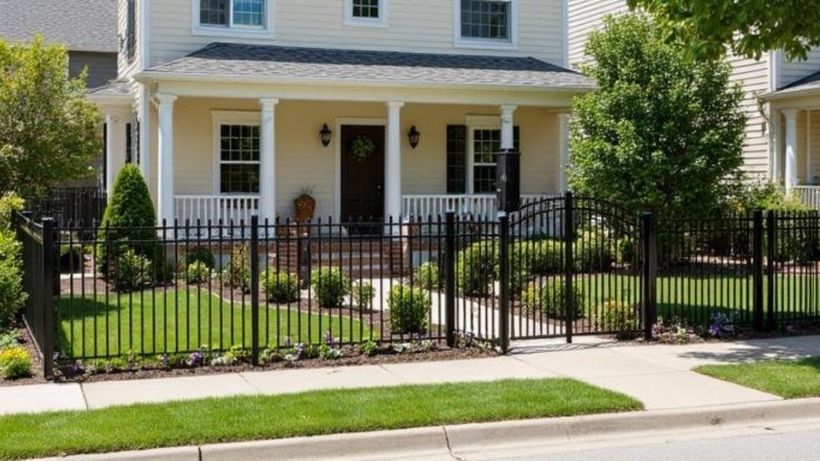
Ornamental aluminum compared with steel and wrought iron
Traditional wrought iron and modern ornamental steel are strong and heavy, and they have a classic look many people love. Their weakness is rust. Once the paint or powder coat is chipped, moisture reaches the steel and corrosion starts, creeping under the finish and staining the surrounding coating. In an area where winter brings road salt and summer brings long stretches of humidity, steel fences need regular inspection, touch-up and eventually full refinishing.
Aluminum does not rust the way steel does. When the bare metal is exposed it forms a thin oxide layer that protects it from further corrosion. That makes aluminum a strong fit for front yards, pool areas and anywhere the fence will be splashed by sprinklers or snowmelt. It is also much lighter, which makes panels easier to handle and reduces the load on posts and gate hinges. The tradeoff is that aluminum is not as strong as steel for the same size. A thin aluminum picket will bend if a car backs into it or a large dog repeatedly slams against it. Choosing the right grade for your use keeps that from being an issue.
Powder coat finishes, colors and how to care for them
Most ornamental aluminum fencing is finished with a baked-on powder coat. Dry paint powder is applied to the metal and then cured in an oven, forming a hard, even layer that resists chipping and fading better than typical liquid paint. Black is by far the most common color, because it recedes visually and lets the yard and house take center stage. Bronze, white and a few other colors are also available from many manufacturers.
A good powder coat will hold its color for years, but it is not indestructible. String trimmers, lawn mower decks and snow shovels can chip it. Minor chips on aluminum are mostly cosmetic, since the metal underneath will not rust through, but they can be touched up with matching paint from the manufacturer. Cleaning is simple: rinse with a hose and use mild soap and a soft brush for dirt or pollen. Avoid harsh solvents and abrasive pads that can dull the finish.
Residential, commercial and heavier grades of aluminum
Not all aluminum fencing is built the same. Manufacturers usually sell several grades, often described as residential, commercial and industrial or heavy-duty. The differences are in picket size, rail size, wall thickness and post size. Residential grade uses lighter pickets and rails and is designed for typical yard use: marking a boundary, framing a garden, containing a well-behaved dog or enclosing a pool.
Heavier grades use thicker pickets, deeper rails and larger posts. They cost more but resist bending and flexing better, which makes sense along driveways, in yards with large active dogs, near sports areas or in places where people might lean on the fence. On a long, tall run or a wide gate, stepping up a grade can keep the fence from feeling flimsy. Ask the contractor which grade they are proposing, how thick the pickets and rails are and what post size will be used at corners and gates.
- Residential grade: lighter pickets and rails for everyday yards and pools.
- Commercial grade: thicker parts for heavier use, larger dogs or long spans.
- Heavy-duty grades: reserved for high-traffic or high-impact areas.
- Gate posts and wide gates often benefit from a heavier post even on a residential fence.
Rackable panels for sloped Cincinnati yards
Few places in the region are flat for long. Yards in Anderson Township, Delhi, Green Township, Westwood and along the Ohio River hillsides often slope steadily or roll from one side of the lot to the other. Standard aluminum panels are built square, so on a hill they must be stepped down section by section, leaving triangular gaps under the low end of each panel. That can look choppy and may leave openings a small dog could squeeze through.
Rackable panels solve much of that. The pickets are attached to the rails with a pivoting connection, so the entire panel can shift into a parallelogram and follow the grade while the pickets stay vertical. The fence line then tracks the ground more smoothly, with a consistent gap at the bottom. Each product has a maximum rack angle, and very steep grades may still need a combination of racking and stepping. Ask whether the panels are rackable, how much slope they handle and how the installer plans to deal with sudden grade changes, retaining walls or steps in your yard.
Pool enclosures: self-closing, self-latching gates and local rules
Aluminum is a popular choice for fencing around in-ground and above-ground pools because it does not rust around chlorinated water, stays open to sight lines and can be built in styles that are difficult for young children to climb. Pool barrier rules are set at the local level. Cities, townships and some HOAs may regulate fence height, picket spacing, the distance between horizontal rails, the size of openings and the placement and function of gates. Check with your city or township building or zoning office, and your HOA if you have one, before choosing a design.
In many areas, pool gates are expected to open outward from the pool, close by themselves and latch automatically, with the release placed high enough that small children cannot reach it. Hinges with built-in springs or separate closers pull the gate shut, and magnetic or gravity latches catch it without anyone needing to push. These parts need occasional adjustment as the gate settles. Ask the contractor to confirm that the design, gate swing and hardware fit your local requirements, and test the gate yourself from several angles once it is installed.
Picket spacing, puppy pickets and keeping pets inside
Standard ornamental aluminum has open space between pickets, which gives the fence its airy look. For many dogs that is fine. Small breeds, puppies and cats, though, can slip through gaps that look narrow to us. Some product lines offer tighter picket spacing across the whole panel, and others offer puppy pickets, extra short pickets placed between the regular ones along the bottom portion of the panel to close the gaps where small pets are most likely to push through.
Also consider the space under the bottom rail. On level ground the fence can sit close to the soil, but on slopes and uneven ground the gap may widen. Rackable panels, careful grading and adding soil or edging along low spots help keep that gap small. If you have a determined digger, a buried wire barrier or a concrete mow strip under the fence can stop digging. Share details about your pets with the contractor so they can suggest the right spacing and bottom treatment.
Front-yard height limits and styles that fit the neighborhood
Aluminum is common in front yards because it defines the space without blocking the view of the house. Many cities and townships limit fence height in front yards and near corners so drivers can see pedestrians and cross traffic. Those limits vary from place to place, and there may be separate rules for side yards, back yards and fences along sidewalks. Before ordering materials, check with your city or township and your HOA about front-yard height, setbacks, corner-lot visibility and any design standards.
Style matters too. Flat-top panels with a top rail over the pickets look clean and are friendlier where people lean or kids play. Spear or pressed-point tops look more traditional, but they are harder to climb over and less comfortable to touch. Some styles add rings, finials or decorative accents. In older neighborhoods such as Hyde Park or parts of Loveland and Milford, a simple black ornamental fence often fits the architecture well, while newer subdivisions in Mason, West Chester and Liberty Township may have HOA-approved styles to choose from.
Installing posts in soil, concrete or on existing hardscape
Most aluminum fence posts are set in concrete footings dug into the ground. In the heavy clay soils common around Cincinnati, holes should be deep enough to get below frost and to resist the lifting force of freeze-thaw cycles. The top of the concrete should be crowned so rain runs away from the post. Posts are set plumb and at consistent heights, then the panels are attached with brackets or by sliding rails into routed holes, depending on the system.
Where the fence runs along an existing patio, pool deck, retaining wall or concrete walkway, posts can be core-drilled into the concrete and anchored with non-shrink grout, or mounted to the surface with base plates bolted down. Core-drilling gives a cleaner look and a stronger connection when the slab is thick and sound. Surface mounts work in some situations but can be less rigid. Ask how the contractor plans to handle concrete, stone or block areas, how thick the existing slab is and how they will seal around each post to keep water out.
Maintenance, repairs and what a good proposal spells out
Once installed, aluminum fencing needs very little care. Rinse off dirt and pollen, clean off any mildew with mild soap and water, trim plants so they do not rub on the finish and check gate hinges and latches once or twice a year. Pool gates should be tested regularly to make sure they still close and latch on their own. If a post leans, the footing or soil is usually the issue, and resetting the post often fixes it without replacing panels.
Individual panels, pickets and posts can usually be replaced if damaged, as long as you know the manufacturer, style, grade and color. Keep that information with your house paperwork so future repairs match. A clear proposal should cover the points below so you can compare options and avoid surprises.
- Manufacturer, product line, grade, style and color.
- Fence height, picket spacing and whether puppy pickets are included.
- Whether panels are rackable and how slopes will be handled.
- Post sizes at corners, ends and gates, hole depth and concrete, or core-drilling details.
- Gate sizes, hinges, latches and self-closing or self-latching hardware for pool areas.
- Confirmation of property lines, utility locates and who handles any permit.
- Removal of old fencing, cleanup and the expected installation window.
Aluminum fence in Cincinnati — common questions
Is aluminum fencing strong enough for a big dog?
It can be, if you choose the right grade and style. Lighter residential panels are fine for many dogs, but a large, active dog that jumps or charges the fence may bend thin pickets. Heavier commercial grades use thicker pickets and rails and hold up better. Consider a taller fence, closer picket spacing and a solid bottom treatment if your dog is a jumper or a digger.
Will an aluminum fence rust like my old iron fence?
No. Aluminum forms a thin protective oxide layer instead of rusting like steel. The powder coat finish can chip or scratch, but the metal underneath will not rust through and stain the surrounding finish the way iron does. Chips can be touched up with matching paint from the manufacturer for appearance. Regular rinsing and occasional mild soap washes keep it looking good.
Can aluminum fence panels follow the slope of my yard?
Many aluminum lines offer rackable panels. The pickets pivot at the rails so the panel can shift into a slanted shape and follow the grade while the pickets stay vertical. Each product has a limit on how much it can rack, so very steep yards may still need some stepping. Ask the contractor which panels they plan to use and how they will handle steep spots.
What do I need for a pool fence gate?
Pool barrier rules are set locally, so check with your city or township and your HOA. Many areas expect gates that open outward from the pool and close and latch on their own, with the latch release placed high enough that young children cannot reach it. Ask the contractor to confirm the fence height, picket spacing and gate hardware meet the rules where you live, then test the gate often.
Can small dogs squeeze through aluminum fence pickets?
Some can. Standard picket spacing leaves open gaps that many small breeds and puppies can slip through. Look for panels with tighter spacing or puppy pickets, which add short pickets along the bottom to narrow the gaps. Also keep the space under the bottom rail small by using rackable panels on slopes and filling low spots along the fence line.
How tall can an aluminum fence be in my front yard?
Front-yard height limits vary between cities, townships and HOAs, and there may be separate rules for corner lots and fences near sidewalks. Many places restrict front-yard fences to a lower height than backyard fences so drivers can see around corners. Check with your city or township zoning office and your HOA before choosing a height, and ask the contractor to design the layout around those rules.
Can aluminum fence posts be installed on a concrete patio?
Yes. The contractor can core-drill holes into a sound, thick slab and set posts with non-shrink grout, or in some cases bolt surface-mount posts with base plates to the concrete. Core-drilled posts usually look cleaner and feel sturdier. Ask how thick the slab is, how the holes will be sealed against water and whether any cracks or weak spots need attention first.
Talk through your site
Start with the address, what you want done, and a few photographs of the area, including anywhere water sits after a heavy rain.
Related work
Fence Installation
New residential fences, laid out, set and finished for Cincinnati clay and hills.
Fence Repair
Leaning posts, sagging gates, storm damage and rotted boards, and when to replace instead.
Wood Privacy Fences
Board-on-board, shadowbox and stockade privacy fences, and how to make wood last.
Vinyl Fences
Low-maintenance vinyl privacy and picket fences and what cold winters ask of them.
Chain Link Fences
Galvanized and black-coated chain link for yards, dogs and property lines.
Across the metro
West Chester
Newer subdivisions, HOA rules and flat-to-rolling lots in Butler County.
Mason
Suburban lots in Warren County, many with covenants on fence style and height.
Anderson Township
Wooded, hilly east-side lots where slopes and deer shape the fence.
Green Township & the West Side
Older west-side neighborhoods, steep yards and mature trees.