Home › Services
Fence installation in Cincinnati: from layout to the last gate latch
A new fence looks simple from the sidewalk: posts, rails, boards, a gate. What decides whether it stands straight for decades or starts leaning after a couple of winters is mostly hidden: where the line actually runs, how deep the holes go, what the posts sit in, and how the run handles a sloped yard. If you are comparing each fence company Cincinnati homeowners have recommended, this page explains each step the way a careful installer would, so you can ask sharp questions and read a proposal without guessing.
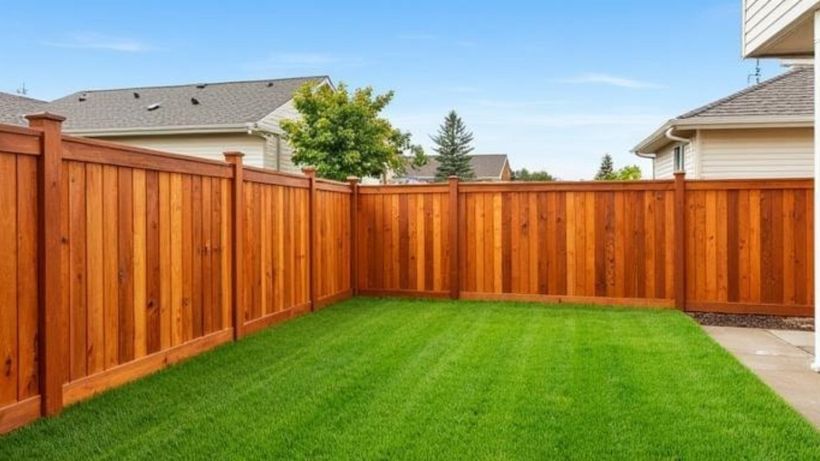
Planning the layout before anyone digs
Start with what the fence has to do. Keeping a dog in, blocking the view of a neighbor's deck, closing off a pool, marking a boundary and slowing down foot traffic through a corner lot are different jobs, and they point toward different heights, materials and gate placements. Walk the yard with a can of marking paint or a string line and think about how you move through the space: where the mower comes in, where trash cans roll out, where a truck might need access for a future project.
Gates are the part people most often regret. A single walk gate around four feet wide handles people, wheelbarrows and most mowers. A double drive gate makes sense if you ever expect a vehicle, a small excavator or a load of mulch to come through. Put gates where the ground is fairly level, because a gate on a slope either drags on the uphill side or leaves a wide gap on the downhill side. Corners, ends and gate openings all need heavier posts, so a layout with fewer jogs usually costs less and stands better.
Property lines, surveys and staying on your side
A fence that lands a foot onto the neighbor's lot can turn into a long argument and, in the worst case, a teardown. Old fences, hedges and the edge of the neighbor's mowing are not reliable markers. Many Cincinnati lots, especially older parcels in neighborhoods like Westwood and Hyde Park, have irregular lines, and newer subdivisions in West Chester, Mason or Liberty Township often have easements running along the rear or side of the lot.
If you have a recent survey with the corner pins marked, the installer can pull a line between pins. If the pins are missing or buried, a surveyor can find or reset them. Many homeowners set the fence a few inches inside their line on purpose so that the footings and the finished face stay fully on their own ground and so there is room to maintain the outside. Easements for drainage or utilities may restrict what can be built over them, so read the plat or ask the county before settling on the line.
Calling 811 so utility lines get marked
Ohio uses the 811 call-before-you-dig system, and it applies to fence post holes just like any other digging. After a request is placed, the utility operators send locators to paint or flag their buried lines, typically within a few working days. Gas, electric, telephone, cable and public water and sewer laterals are commonly marked. Private lines, such as a buried feed to a detached garage, a sprinkler system, a dog fence wire or a line to a backyard lamp post, are usually not, so point those out to the installer.
A good installer will adjust post spacing to straddle a marked line rather than force a hole on top of it, and will hand-dig near any marking. Ask who places the 811 request, since on many jobs the contractor handles it, and ask to see the marks before auger work starts.
Permits, zoning and HOA rules vary across the region
Fence rules are set locally, and the Cincinnati area is a patchwork of cities, villages and townships across Hamilton, Butler, Warren and Clermont counties. Some require a zoning permit for any new fence, some only for fences above a set height, and many limit height in front yards, on corner lots near intersections where sight lines matter, and around pools. Setback rules and which side faces out can also be specified.
Check with your city or township zoning office before you sign. If you live in a subdivision with an HOA, read the covenants and submit for architectural approval if required, since many associations limit style, color, height and material. Ask the contractor whether they will pull the permit or whether that falls to you, and get the answer in writing.
Frost depth, post holes and why depth matters here
Southwest Ohio winters freeze and thaw repeatedly, and wet soil expands as it freezes. A post set too shallow can get pushed upward a little each winter, a process called frost heave, until the line wanders and gates stop latching. Frost depth used for footings in this area is commonly cited at roughly three feet, but the figure your local building department uses is the one that counts, so confirm it before assuming.
A common rule of thumb is to bury about a third of the post's total length, and to go deeper for tall privacy fences, gate posts and anything on a hillside. Hole diameter matters too: a hole roughly three times the width of the post gives enough material around it to resist leaning. Bell-shaped bottoms, where the hole is slightly wider at the base than the top, help resist upward frost pressure.
Clay soils and hillsides: how Cincinnati ground changes the job
Dig a post hole almost anywhere around here and you hit sticky clay, often with limestone and shale layers further down. Clay holds water, swells when wet, shrinks and cracks when dry, and turns slick and soft after a long rain. On the hills that define so much of the region, from Delhi and Green Township down toward the Ohio River to the ridges around Anderson Township and Milford, that same clay can creep slowly downhill. An auger can also hit rock ledges or old fill in some yards, which slows digging and sometimes means shifting a post a few inches.
Drainage at the bottom of each hole is the answer to wet clay. A few inches of crushed gravel under the post lets water drain away from the end grain instead of sitting in a cup of clay. On slopes, installers either rack the fence or step it:
- Racking: rails follow the slope, so the panel leans with the grade and the bottom stays close to the ground. It works well for chain link, many ornamental aluminum styles and site-built wood.
- Stepping: each section stays level and drops a set amount at each post, leaving a triangular gap under the downhill end. It suits rigid vinyl panels and formal designs.
- Custom cutting: on steep or uneven grades, wood pickets can be cut to follow the ground while rails step, which closes gaps for pets.
Setting posts: concrete, gravel and the tradeoffs
Posts go in one of a few ways, and installers have honest disagreements about which is best. Concrete encasement locks the post solidly and is standard for gate posts and tall privacy runs. The weakness with wood is that a concrete collar poured flush with the ground can trap water against the post at grade, where rot starts. Crowning the top of the concrete so water sheds away, and keeping gravel beneath the post, reduces that risk.
Compacted gravel or crushed stone backfill drains freely and makes a rotted post easier to pull later, but it relies on thorough tamping in thin layers. Some contractors combine the two: gravel at the bottom, concrete in the middle, soil or gravel at the top. For vinyl and aluminum, posts are usually set in concrete, and for chain link the terminal posts almost always are. Ask which method the proposal uses for line posts, corners and gates, and why.
Gates and hardware that keep working
Most service calls on newer fences come back to gates. A gate is a lever hanging off one post, and every time it swings, that load works the hinge post loose. Heavier hinge posts, set deeper and in concrete, prevent a lot of sag. Wood gates should have a diagonal brace running from the bottom hinge side up to the top latch side, or a steel frame, and wide gates benefit from an adjustable anti-sag cable kit from day one.
- Hinges: heavy strap or adjustable hinges sized for the gate weight, with galvanized or powder-coated finish.
- Latches: gravity latches for everyday use, and self-closing, self-latching hardware wherever a pool is involved; check local pool barrier rules.
- Drop rods: a cane bolt into a sleeve in the ground holds one leaf of a double drive gate closed.
- Clearance: a couple of inches under the gate so it clears grass, snow and seasonal heave.
Materials compared for Cincinnati yards
Each material handles humid summers, freeze-thaw winters and clay soil differently. Pressure-treated pine is the common privacy choice and takes stain well, but it checks, twists and needs sealing. Cedar resists decay better, stays straighter and weathers to silver if left alone. Vinyl needs little upkeep beyond washing, though it can become brittle in hard cold and rigid panels are harder to fit on slopes. Aluminum ornamental fencing does not rust, racks to follow hills well and suits pool areas and front yards. Chain link is the economical way to contain pets or define a large lot, and vinyl-coated black or green versions blend into landscaping.
What moves the cost of fence installation in Cincinnati is mostly the total length, the height, the number of gates and corners, the material grade, how much rock or root work the holes need, the slope, and how much old fence has to come out first. A short run with three gates can cost more per foot than a long straight run.
What a proposal should spell out, plus scheduling and cleanup
Careful fence installation Cincinnati homeowners can live with for decades starts on paper. A clear written proposal protects you and the contractor. It should list the exact line or a sketch, the total length, height, style and material grade, post size and spacing, hole depth, how posts are set, the rail and fastener type, the number and width of gates, and the hardware. It should also say who handles 811, permits and HOA approval, whether old fence removal and haul-away are included, what happens if rock is hit, and how the payment schedule works.
Fences can be installed most of the year here, though frozen ground in the depth of winter and saturated clay in a wet spring can both slow digging. Late spring and summer tend to book up earliest, so planning ahead in late winter helps. On installation day, expect post holes first, then a day or more for concrete to set before panels or rails go on, depending on the mix and weather. A careful installer spreads or hauls away the excavated clay rather than leaving mounds, picks up screws and cutoffs, and walks the line with you to test each gate before calling the job done.
Fence installation in Cincinnati — common questions
How deep should fence posts be set in Cincinnati?
Plan on deeper than most people expect. Local frost depth is commonly cited around three feet, and many installers aim for that or close to it, going deeper for gate posts and tall privacy fences. A rule of thumb is to bury about a third of the post length. Your city or township building department sets the official frost depth used for footings, so confirm the number there, and make sure the proposal states the planned hole depth in writing.
Will my city or township want a permit for a new backyard fence?
It depends on where you live. Some Cincinnati-area cities and townships require a zoning permit for every new fence, others only above a certain height or in front yards, and pool fences often have their own rules. Call your local zoning office before you sign a contract. If you have an HOA, submit for approval too, since covenants frequently restrict height, style and color. Ask the contractor whether they file the permit or you do.
Who is responsible for knowing where my property line is?
Ultimately the owner is, which is why a survey or located corner pins are worth the effort before a new fence goes in. An installer can follow pins or a survey you provide, but will not normally guess at a boundary from an old fence or a hedge. Many people set the fence a few inches inside their line so the footings stay on their own land and they can maintain both faces.
Can a fence be installed on a steep hillside?
Yes, and it is common across the Cincinnati area. On a slope, the fence is either racked, meaning the rails follow the grade, or stepped, meaning each section is level and drops at every post. Aluminum, chain link and site-built wood rack well, while many vinyl panels only step. Steeper grades usually call for deeper posts and closer spacing, and the ground under each section may need shaping or backfill to close gaps.
What is the best time of year to install a fence?
Fence work can happen through most of the year here. Frozen ground in midwinter and very wet clay after spring rains are the main things that slow installers down. Late spring and early summer book up first, so reaching out in late winter or early spring gives you more choice of dates. Fall is often a good window, with firm ground and milder temperatures for setting concrete and staining wood.
Should fence posts be set in concrete or gravel?
Both methods work when done well. Concrete holds posts rigidly and is standard for gates, corners and tall privacy runs. Gravel drains better and makes future replacement easier, but it needs careful tamping. With wood posts, the key is drainage: gravel beneath the post and a crowned concrete top that sheds water help slow rot at ground level. Ask the installer what they plan for each post type and the reason behind it.
How long does a typical fence installation take?
A typical backyard fence often takes a few days on site, but it varies with length, material, slope and weather. Posts usually go in first, and concrete needs time to set before rails and panels are attached, so there may be a pause between steps. Rock in the holes, steep grades, custom gates and old fence removal can all add time. Permits and HOA approval can add weeks before work starts, so start that paperwork early.
Talk through your site
Start with the address, what you want done, and a few photographs of the area, including anywhere water sits after a heavy rain.
Related work
Fence Repair
Leaning posts, sagging gates, storm damage and rotted boards, and when to replace instead.
Wood Privacy Fences
Board-on-board, shadowbox and stockade privacy fences, and how to make wood last.
Vinyl Fences
Low-maintenance vinyl privacy and picket fences and what cold winters ask of them.
Chain Link Fences
Galvanized and black-coated chain link for yards, dogs and property lines.
Aluminum & Ornamental Fences
Ornamental aluminum for front yards, slopes and pool enclosures.
Across the metro
West Chester
Newer subdivisions, HOA rules and flat-to-rolling lots in Butler County.
Mason
Suburban lots in Warren County, many with covenants on fence style and height.
Anderson Township
Wooded, hilly east-side lots where slopes and deer shape the fence.
Green Township & the West Side
Older west-side neighborhoods, steep yards and mature trees.